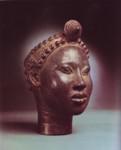
Restoring neglected palaces across Africa
Most African palaces harbor tangible as well as intangible elements that could be harnessed to enrich the community in many positive and meaningful ways.
Our goal
Our goal is to restore neglected palaces across Africa and and make them relevant to the African and world community. Most African palaces harbor tangible as well as intangible elements that could be harnessed to enrich the community in many positive and meaningful ways. The palace system once played, and can still, play a variety of vital roles in the lives of the average African.
By restoring and bringing a typical palace to prominence, we also accomplish the following: We preserve the ancient earthwork architecture for the world to enjoy; foster an appreciation and a return to earthwork constructions; and we encourage an appreciation of traditional African social systems which once served to:
- Enrich the people by stressing meaningful interpersonal relationships
- Emphasize and value peace
- Emphasize self dignity, rational life styles which balance the material with the spiritual and physical well being
If you have a palace restoration project in Africa
If you have a palace restoration project in Africa, and need our support, here is how to contact us. Applications should be emailed to Info@mypalaceinitiative.org or mailed to
My Palace Initiative,Box 8547, Emeryville,
Ca 94662, USA.
Please supply a letter detailing, but not limited to, the following:
- Your aspirations
- Pertinent information such as location of palace and a brief history
- What has led to its disrepair
- Photos documenting the disrepair
- How you intend to organize the townspeople
- And what the townspeople will contribute
- Any other information you deem relevant
Our current active project is listed below. Please read on for pertinent details.
The Palace at Ikere
Ikere is a small West African town that dates to the 13th century AD. Ikere historians recount the Benin/Edo origin of the Ikere monarch and palace system. Just as in the Biblical story about Jacob and Esau, a second-born Edo brother received the first-born brother's birthright and was installed King of Benin Kingdom.
Rather than fight, the first-born, Prince Agirilala, left Benin and became the founder of the Ikere palace system—naturally a replica of the Benin or Edo system.
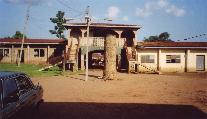
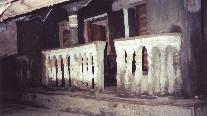
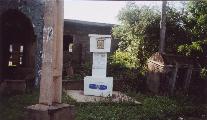
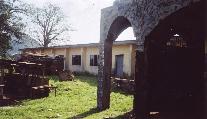
Unlike the Benin palace which has been relatively well maintained and highly publicized (partially for its highly sophisticated artwork, much of which was seized by the British in the late 1800s), the Ikere palace has fallen into such disrepair that it is hardly recognizable under the corrugated tin roofs that hide the palace's original walls. One of Ikere palace's orginal doors is in the British Museum. With the deterioration of the Ikere palace has come dissolution of much of the way of life that has its roots in traditional practices dating back, perhaps, well over a millennium.
Inspiration
My Palace Initiative was inspired by the desire to help organize the restoration of the palace of Ikere. we quickly realized that neither the collapse, nor the conditions leading to the collapse of the palace, was unique to Ikere. Indeed, archeologists and historians estimate there are thousands of palaces across Africa, and most of them need work. As such, My Palace Initiative is a Pan-African one. We hope that the reconstruction of the Ikere palace will serve as a model for our next undertaking.
A way of life within the walls
Within the gardens and walls of the Ikere palace, as with other palaces throught Africa, the cultural life of African people thrived prior to European colonization.
Unlike European palaces, African palaces were built by, and belonged to, the people. No one owned the palace; rather, the palace belonged to everyone and served as housing for the royal families as well as those in need. The poor as well as travelers could always count on the palace for refuge.
In addition to residential quarters, the palace also incorporated shrines, meeting places, healthcare venues, offices for ritual professionals, studios for royal artists and craftsmen, storehouses, and very often, wells to supply potable water--water which was believed to harbor healing powers.
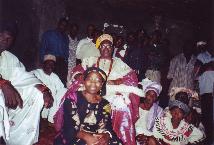
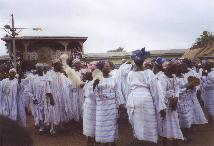
Just outside the palace walls is Oja Oba, the town's major market place named for the King. History has it that many private homes were demolished to provide this space exclusively for women traders to conduct their business under the Oba's full protection. It has always been a reciprocal relationship: typically, every duly appointed Oba enjoys the adoration and indispensable support of the market women.
We want to rebuild these cultural icons and return to our children the vibrant way of life the ancient earthwork palaces fostered. This is one of our many gifts to the world, and it is our obligation to preserve and restore the palaces as they were originally built.
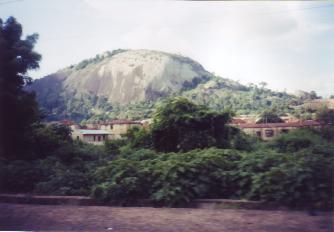
The palace today
The Ikere Palace Restoration Subcommittee
- Dupe Folayan, Minnesota — Subcommittee Chair
- Tayo Ajewole, London
- Jide Akinola, Maryland
- Micho Ade, Ibadan
- Dupe Adeniyi, Lagos
- Ojo Abioye, Akure
- Chief Olusola Bayode, Ikere, Adviser, Funds
- Princess D. Abioye, Adviser, Aafin Ogoga history
- Iyalode Bosede Akanle, Ikere, Adviser, Cultural
- Prince Adedotun Layade, Ile-Ife, Restoration